Showing posts with label Health. Show all posts

Saturday, March 31, 2012

Precautions to take when you workout sick

It happened, my munchkin man got me sick. No race this weekend, skipped a 5 miler on Wednesday, passed on the zoo Friday <insert sigh> plans just didn't work out. But after one day of rest I was itching to be active again.

During my doctors visit I was told that I had to take it easy. My heart rate was higher than normal. So when I started my routine I made sure I was monitoring my heart.

While completing my workout I took precautions to make sure I wasn't going to do more harm than good.

(1) Stay hydrated and drink electrolytes. Dehydration is a problem when you're sick. Add in the extra sweat and it can accelerate the problem.

Keep your drink handy so you don't have to stop to rehydrate.

Nuun is a good way to get electrolytes without the unnecessary sugar.

(2) Make sure you have something to eat before hand. I do not eat much when I'm sick because my stomach doesn't cooperate. But if I do any kind of physical activity I know it's important to consume something before hand. It helps from getting dizzy and passing out.

TryChips are great source of fuel they are all natural and very easy on the digestive system.

(3) Listen to your body. When I started my cardio workout I knew it was too much, so I decided to change my routine and do some easy strength training.
Utilize the space in your house. The long hallway in mine is great for lunges.

(4) Stay away from forms of exercises where you move quickly between different height levels (for example Burpees). I love a good Burpee but when you have sinus pressure the quick movement down and up can cause dizziness. Instead, do exercises that are centered on one level (like one legged plank).
Keep it easy.

(5) Don't workout in public. If you are contagious stay home or do your workout where you won't have to worry about interacting with other people. Don't pass your cold. It's not polite.

Don't spread your germs!

Tuesday, March 27, 2012

Keeping the Sniffles Out of Your House - Preventing the Spring Cold

As a runner I have a some common fears which include shin splints, stress fractures, and plantar fasciitis. But as a mother and runner my biggest fear is the flu (even a cold). It's just my luck, the moment Mother Nature graces us with beautiful weather I get a phone call at work about MG being sick. I spent my lunch time searching "Spring Flu", "Preventing Flu", and "toddler colds". How is a mom to deal? From my findings in my Google research and my personal experience, here are some tips on making sure you prevent or beat the spring flu.

Eat Foods that Fight the Flu and Common Cold
There are some good flu fighting foods out there. They include foods rich in calcium (vitamin D is good at helping fight germs), vitamin C enriched fruits and veggies (oranges and red bell peppers), green tea (helps relieve inflammation), berries full of antioxidants (blueberries and strawberries), and healthy carbohydrates (full of zinc).

Take Everyday Precautions
- Wash hands with soap and water.
- Cover your nose and mouth when you sneeze.
- Stay away from touching your face (mouth, nose, and eyes).
- If your child is sick DON'T SEND THEM TO SCHOOL! If you are sick stay home from work.
-Disinfect. Germs can live up to three hours on objects, so if you have a sick child clean door handles, toys, and anything else your child may have touched, sneezed on, or licked.

Exercise
One of the easiest ways to combat the cold and flu is to stay healthy.  If you are not feeling sick try not to skip your workout. If you start to feel sick transfer your workout routine to your house and complete what you can comfortably do in your current condition.

Get Fresh Air
Since the weather is warmer, open your windows to let some fresh air in. It will help energize everyone stuck indoors. If you and the kids are up for a walk, take one. Just make sure you stay away from other children and playgrounds. Sometimes fresh air is exactly what a sick family needs.

I wish everyone a cold/flu free spring!

Carin Gorrell (March 13, 2012). 10 Best Foods to Fight Off Your Spring Cold and Flu. Posted on ABC News

Saturday, March 10, 2012

MultiSport World Conference and Expo NYC Recap

Today was pretty awesome. I love conferences and seminars. Learning new information is one of my passions (that's probably why I am still in school). And I will never pass up a opportunity to do some shopping for new running gear. So there was no way I could pass up a day that incorporated both!


The MultiSport World Conference and Expo "gives you everything you need to prepare for the new season including seminars offering guidance on training, nutrition and injury prevention training clinics to help you improve your swim stroke and running technique workshops on strength training and completing your first triathlon... competitive events for an early season test of your endurance vendor expos featuring race directors, certified coaches, local multisport clubs and retailers and manufacturers of products, gear and apparel... and more! "

Me talking with the CEO of TryChips. Photo taken by MultiSport Conference
Even though I am not a triathlete, I thought by attending the conference I could walk away with a better understanding of endurance sport training. And I was right. The conference provided breadth and depth on numerous topics ranging from exercise and quality of life to avoiding injury during race day. The speakers were professionals in their fields holding PhD's, MD's, and RN's. Each seminar section was approximately 15 minutes (without question and answer sessions). The speakers utilized power points, videos, and even live demonstrations. 

Live demo on high to properly ride
In between each speaker the coordinator would give away awesome prizes for people who could correctly answer questions that ranged from basic history to  pop culture. Some of the prizes given away included swimming clinics, gift cards to athletic stores, signed books, etc. The grand prize was a CompuTrainer Pro valued at $1,500. Overall a great place to grab some free swag. 

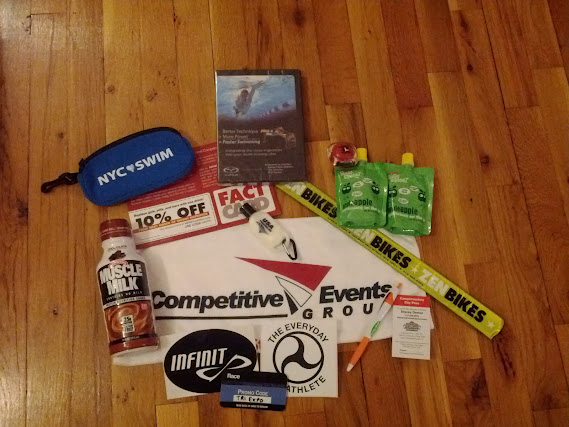
The registration bags also came with some nice goodies.

And the expo provided some great take homes.

I also walked away with some purchased items.
Orange shirt says "Run like a Mother" and the Yellow says "Thirteen point freaken one". The TryChips are amazing snacks that I just couldn't get enough of! And of course some new CEP compression socks
Besides the vendors and expo, the seminars were excellent. Some of the important tips and information I took away from the conference were the following:
Exercise
  • In recent research, people who could run longest on a treadmill had lower chronic disease.
  • If you stay active, there is no reason you shouldn't be doing the same thing at 80 as you did at 25. 
  • Exercise is the vaccine needed to prevent & treat chronic disease. Everyone needs to take it.
  • Low levels of fitness are larger risk factors of mortality compared to mild/moderate obesity 
  • Exercise increases the quantity and quality of life.
Nutrition
  • Cut back on the crap food, it's better to be fit and fat than thin and inactive.
  • Be happy with your weight by making the best of your body.  
  • Not everyone is built the same. So to compare is to despair. You should not compare yourself to other runners.
  • Athletes should eat evenly throughout the day this prevents the body from getting too hungry. This can be accomplished by eating carbs.
  • Best way to lose the extra weight is to chip away calories at end of day
  • All athletes need to take rest days to allow their body to refuel. These rest days will not cause a decrease in ability, but will allow for the body to recover from intense training.
Racing Smart and Being a Happy Athlete
  • Newbies represent 50% of the field in shorter race distances, 25% of the field in longer race distances.
  • Some of the down falls newbies face during racing include being disorganized, being surprised by the race course, experiencing emotional fatigue, having heighten external awareness (being hyper-aware of the people around them).
  • Newbies can beat these problems by making sure that they have fun, they really get into race, focus on finishing, enjoy it enough to want to do it again, make sure to get fit for the race, know the course, learn competitive skills, set goals and achieve them.
  • A runners physiology affects their emotional happiness as well. So athletes can prepare correctly by properly hydrating, consume electrolytes, intake enough calories, manage your heart rate, and being aware of the heat you are racing/training in.
Preventing Overheating While Racing
  • Prevention of overheating is as simple as these few steps: slow down the pace, stay properly hydrated, be aware of environmental conditions, acclimatize, and listen to your body.
  • Practice drinking fluids while training, this allows for your body to understand what it needs to stay properly hydrated as well as it allows for you to feel comfortable in-taking fluid while being active.
  • Athletes should train in the heat if they are racing in the heat. This allows for the body to become accustom to the hot conditions and increases sweat glands.
  • Athletes need to watch their sodium levels by utilizing electrolytes.
Injury and Injury Prevention
  • Why do athletes get hurt? Two main reasons: acute injury or overuse. Overuse is the most common form of injury. And women are most likely to suffer from it.
  • When is it good to say no and to stop pushing through the pain? When the mechanics of what you are doing changes. If the athlete begins to compensate for the pain they are feeling (by limping, shifting weight, etc) this is an indication of a major problem. By pushing through the pain, you run the risk of increasing the damage and being out for the season.
  • Injury prevention begins with strength training, this should be done at least twice a week.
Here are some great videos taken from today (not by me).


Overall it was a wonderful day! Thank you MultiSport for putting on a wonderful conference stocked full of great information!

Keep your eyes on Happy Mother Runner because we will soon be chock full of awesome giveaways!

Until then...
Be Inspired, Stay Motivated, Run Strong!

Tuesday, November 22, 2011

Everyone Dies, Unfortunately Some Die While Running

As a new runner, I am saddened and, honestly, terrified after hearing all the news stories about runners who have died suddenly while running (or after finishing) a race. It's hard not to see these stories and let the very sad outcome of these runners affect your mental strength. As a researcher, I couldn't help but do what I do best.... Google how to stay healthy during marathon training and racing. What I found, might be common sense to most people but to me was new information that is helping me overcome the irrational fear I have developed (don't get me wrong, I am still running races but my head keeps going to the "no no" place of "what if you die while doing this?").

There are a handful of causes of death while running which include sudden death, hyperthermia, hyponatremia, and hypothermia.


SUDDEN DEATH
Sudden death happens when the body succumbs to the stress of a marathon either from a preexisting condition or the surge of adrenaline. Numerous doctors and exercise experts have dedicated time to research looking at the cardiac problems of runners to address why there seems to be an increase in cardiac related deaths among runners.

Aerobics Center Longitudinal Study found that the most-fit subjects (not super athletes, but those who exercise 15 to 25 miles per week and have a pace that averages 10 mins) are 50% less likely to suffer from heart-disease, as well as less likely to experience a stroke, have diabetes and high blood pressure, are less likely to have cancer, and are at lower risk of showing signs of Alzheimer's. If the ACLS has found that running is very beneficial to our health, what is the cause of sudden death? A runner who is under 35 years old and suffers from a heart attack is more than likely to have a structural defect in their heart (most commonly a misshaped, malfunctioning, enlarged heart - hypertrophic cardiomyopathy). If the runner is over 35, the cause of death is most likely artery disease (cholesterol deposits  that rupture and then cause a heart attack) because of the flexing of the the arteries that loosens the deposits and then the cholesterol mixes with the blood forms a clot and then clogs the artery.

Besides preexisting conditions, runners can experience adrenaline surges that can lead to death. The  adrenaline surge seems to happen when a runner first sees the finish line. Many times, paramedics are stationed at these areas in races to help runners whom may experience the adrenaline surge. Thankfully the amount of deaths due to adrenaline surges has been on the decrease because of the use of defibrillators. A runner who suffers from an on course heart attack is 50 to 75 percent more likely to be saved, compared to 15 percent on the street.

HYPERTHERMIA
A runners body temp is controlled by the heart pumping blood to the skin where body heat is lost through sweat. Heat loss can happen through high humidity and dehydration . But hyperthermia can also happen from other circumstances like running a faster-than-usual pace which can cause a high metabolic rate. Runners can also overdress or not remove layers to adjust to the climate. Hyperthermia can also be prevented by drinking the water that is lost from sweat.

HYPONATREMIA
The main cause of hyponatremia is drinking too much water, which dilutes sodium levels in the blood causing swelling in the brain. Hyponatremia is much more common in women, slower runners , and those who took over-the-counter nonsteroidal anti-inflammatory drugs. Hyponatremia is most likely to develop after completing a race when sodium is lost in the urine. Staying hydrated by drinking water or sports drinks shouldn't be avoided, because drinking fluids helps maintain adequate blood flow to support demands of running.

HYPOTHERMIA
Hypothermia is most likely to happen in cold, windy, or wet conditions. Other conditions like running slower during your second half of a race can make it difficult to maintain a proper heat level because sweat is building up and wetting clothes, which cools the body temp especially in cool climates. Besides body temp, hypothermia can also cause serious heart problems.

RECOMMENDATIONS (by International Marathon Medical Director’s Association):
1. Participants should be sufficiently trained and have a corresponding race plan that is appropriate for that level of training and fitness.
2. Have a yearly physical examination being sure to discuss your exercise plans, goals and intensity at that visit.
3. Consume one baby aspirin (81mg) on the morning of a long run/walk of 10k or more is no medical contraindication.
4. Consume less than 200mg caffeine before and during a 10K or more.
5. Only drink a sports drink or its equivalent during a workout of 10k or more.
6. Drink for thirst.
7. Do not consume a NSAID during a run or walk of 10k or more.
8. Consume salt (if no medical contraindication) during a 10k or more.
9. During the last mile, maintain your pace or slow down; do not sprint the last part of the race unless you have practiced this in your training. Run/walk as you train.

After reading all the research and information it has helped me realize the true underlying factors of on course deaths. Death while running is still a scary thought, but the truth is that at some point everyone dies; it's unfortunate but some die while running. 

RESOURCES
Jane E. Allen (Nov. 21, 2011), Adrenaline-Fueled Sprint Makes Some Marathons Deadly.
http://abcnews.go.com/Health/HeartDisease/marathon-deaths/story?id=15000378#.TssdcvL4Ji9

Amby Burfoot (Dec, 2008), Special Report: Are Marathons Dangerous? http://www.runnersworld.com/article/0,7120,s6-238-244--12968-6-1X2X3X4X5-6,00.html

Jake Emmett (2007), The Physiology of Marathon Running: Just What Does Running a Marathon Do to Your Body? http://www.marathonandbeyond.com/choices/emmett.htm

Lewis G. Maharam, Arthur Siegel, Stephen Siegel, Bruce Adams, Pedro Pujol & Paulo Alfonso Lourega de Menezes (March 20, 2010), IMMDA’s Health Recommendations for Runners & Walkers. http://aimsworldrunning.org/articles/IMMDA_Sudden_death_and_how_to_avoid_it_3.20.10.pdf


Tuesday, November 15, 2011

Manic Monday at the Doc

Having a child means frequent doctors visits even if they aren't sick. Since Michael was born we have been going to the doctor almost every month either for check-ups, vaccines, or the dreaded flu.  I like to do same day appointments instead of month by month scheduling (for me it's easier because things always seem to change in my house). Yesterday was my day of doctor craziness. I decided when I woke up, since I had the day off, I would take Michael in for his next set of vaccines and a check-up. I should have known that the day wasn't going to go well when it started off with a call to the wrong doctor. The worst part, it took me a whole conversation to realize it. Here is what happened.

MY OOOPS CALL!
How I felt after calling the OBGYN!
Lady: Hello, doctors office.
Me: Hi. What time is the office closed today for lunch?
Lady: The doctor isn't in today.
Me: Oh really. Ok, I guess I need to make an appointment.
Lady: What's the name?
Me: Amanda
Lady: Ok, what is it for?
Me: I need to get my son his next set of shots
Lady: Oh we don't do that here
Me: Really? When did you stop?
Lady: We never gave shots
Me: Last time I brought my son in he had his shots.
Lady: I'm sorry Mrs. Rosenburg, but I think you are confused.
Me: No, no I remember.
Lady: This is the OBGYN, we don't give children shots here.
Me: <Long pause> Oh my God! I have the wrong number! I am so so sorry.
Lady: it does say in your record that you're due for a check up soon.

Me: well I guess I should schedule something.

After hanging up with my OBGYN I called the actual pediatrician and they told me that they weren't busy and to come in right away. The appointment went as expected, Michael screamed and held on like a monkey and the doctor fought with the little guy to get his temp, a look in his ears, and a listen to his heart. The appointment took a turn when Dr. Nick looked at me during one of Michael's screaming fits and asked me if I was feeling ok. I looked at him with a sense of bewilderment. Dr. Nick approached me and asked me if he could touch me.... "umm ok". The doctor started rubbing the front of my neck and he stopped and stepped back and said, "You need to see your doctor. Your thyroid is excessively large." Really?!? 


Since I didn't have work I thought, "why the hell not, lets go to my doctor also." So after Michael finished up, we headed to to my doctor. After an hour and a half wait it was my turn. 
Doctor: What's up Amanda?
Me: Michael's pediatrician thinks that I might have a problem with my thyroid. He said it looks enlarged.
Doctor: Ok, lets take a look. (steps back) swallow for me.
Me: <Gulp>
Doctor: Do you lift weights.
Me: I haven't for a few weeks
Doctor: well, it doesn't look like you have a thyroid problem.
Me: Really? Well, what did he see?
Doctor: <laughs> your neck is more toned compared to most woman.
Me: huh?
Doctor: You have masculine neck muscles.
Me: So you're saying that the weight training I do for my arms has been more effective for my neck
Doctor: Yep, looks like it.


Seriously....FML! Really? I am happy that it isn't a thyroid problem, but the idea that my muscles are building in my neck and I still have the "wave" fat on the bottom part of my arms is irritating. 

So what happened next.... I asked my doctor about my foot pain and he told me that I have the beginning signs of Plantar Fascia (I figured) and that I need to take it easy for a week. Allow for soaking time at night, wear a night brace, not to walk barefoot, do some stretches, and look into alternating my running shoes. So today I went and got an awesome pair of neon blue Mizuno shoes (of course fitted at wonderful Jack Rabbit).
My new foot gear
LOVE the color!


Then I brought up the problem I have with breathing (a variable that has kept my pace rather slow). After some breathing tests and a laundry list of questions, my doc gave me my new running buddy. I am hoping that this will help with all my problems while running. We shall see!


All in all, it was just another manic Monday!